In recent years, Palm Springs, California, has experienced a troubling rise in hate crimes, drawing attention from local authorities, advocacy groups, and national media. Known for its vibrant LGBTQ+ community and inclusive reputation, the city now faces scrutiny over a pattern of bias-motivated violence that contradicts its image as a haven. Data from law enforcement and federal agencies shows a measurable increase in incidents targeting individuals based on sexual orientation, race, religion, and gender identity. This trend places Palm Springs among cities with disproportionately high hate crime rates relative to population size, raising urgent concerns about public safety and social cohesion.
The escalation of hate crimes in Palm Springs is not isolated but part of a broader pattern observed across Southern California and the Coachella Valley. While cities like Los Angeles and San Francisco report higher raw numbers, Palm Springs stands out due to its smaller population and the concentration of incidents in specific neighborhoods. Local police have acknowledged the surge but face criticism for delayed responses and underreporting. Community leaders argue that fear of retaliation and distrust in law enforcement discourage victims from coming forward, creating a gap between official statistics and actual occurrences. This disconnect underscores the need for transparent reporting systems and proactive prevention strategies.
Hate Crime Statistics in Palm Springs, CA
Official hate crime data for Palm Springs reveals a consistent upward trend over the past decade, with notable spikes in anti-LGBTQ+ and racial bias incidents. The FBI’s Uniform Crime Reporting (UCR) Program and the California Department of Justice (DOJ) track these offenses using strict definitions, ensuring comparability across jurisdictions. In 2023, Palm Springs reported 18 hate crimes, a 35% increase from 2022. Of these, 12 were motivated by sexual orientation bias, 4 by race, and 2 by religion. These figures are particularly alarming given the city’s population of approximately 45,000, resulting in one of the highest per capita hate crime rates in the state.
Annual Hate Crime Trends (2019–2023)
The following table summarizes hate crime reports in Palm Springs from 2019 to 2023, based on data from the California DOJ:
| Year | Total Hate Crimes | Anti-LGBTQ+ | Racial Bias | Religious Bias |
| 2019 | 8 | 5 | 2 | 1 |
| 2020 | 10 | 7 | 2 | 1 |
| 2021 | 12 | 8 | 3 | 1 |
| 2022 | 13 | 9 | 3 | 1 |
| 2023 | 18 | 12 | 4 | 2 |
This data shows a steady climb in incidents, with anti-LGBTQ+ crimes consistently making up the majority. The 2023 surge aligns with national trends but exceeds state averages, prompting calls for enhanced monitoring and intervention.
Comparison with Other California Cities
When adjusted for population, Palm Springs ranks among the top five cities in California for hate crime frequency. In 2023, the city reported 40 hate crimes per 100,000 residents, compared to Los Angeles’ 12 per 100,000 and San Diego’s 9 per 100,000. Even Berkeley and Davis, known for progressive policies, reported lower per capita rates at 28 and 22, respectively. This disparity highlights the unique vulnerability of smaller communities where bias incidents can have outsized psychological and social impacts. The concentration of hate crimes in tourist-heavy areas like Palm Canyon Drive and the downtown district further amplifies visibility and fear.
Demographic Breakdown of Victims
Victim data from the Palm Springs Police Department (PSPD) indicates that hate crimes disproportionately affect marginalized groups. In 2023, 67% of victims identified as LGBTQ+, with gay men comprising 50% of cases. Racial minorities, particularly Black and Latino residents, accounted for 22% of incidents. Religious minorities, including Jewish and Muslim individuals, made up the remaining 11%. Notably, 40% of victims were aged 18–35, suggesting younger adults face higher exposure. Gender distribution was nearly even, though transgender individuals reported higher rates of physical assault. These patterns reflect broader societal biases and underscore the need for targeted support services.
Recent Hate Crime Incidents in Palm Springs
Several high-profile hate crimes in 2024 have intensified public concern and media coverage. These incidents range from verbal harassment to violent assaults, often occurring in public spaces frequented by tourists and locals alike. Law enforcement has responded with increased patrols and community outreach, but critics argue that reactive measures are insufficient without systemic change.
Notable 2024 Cases
In January 2024, a transgender woman was assaulted outside a nightclub on Arenas Road. The attacker shouted slurs before punching her and fleeing. Police arrested a suspect within 48 hours using surveillance footage. In March, a Black-owned barbershop on Indian Canyon Drive was vandalized with racist graffiti. The message included threats and symbols associated with white supremacist groups. No arrests have been made in this case. In May, a Jewish family’s home was targeted with anti-Semitic flyers and eggs thrown at their windows. The incident occurred during Passover, adding emotional weight. PSPD classified all three cases as hate crimes and referred them to the Riverside County District Attorney’s Office.
Patterns in Incident Locations
Analysis of 2023–2024 data shows that 60% of hate crimes occurred within a one-mile radius of downtown Palm Springs. Hotspots include:
- Palm Canyon Drive (between Tahquitz Canyon Way and Amado Road)
- The intersection of Indian Canyon Drive and Tahquitz Canyon Way
- The area surrounding the Palm Springs Art Museum
- Public transit stops near the Downtown Park
These locations are high-traffic zones with limited lighting and surveillance, making them attractive to perpetrators. Community advocates have called for improved street lighting, increased camera coverage, and regular foot patrols.
Perpetrator Profiles and Motivations
Of the 18 hate crimes reported in 2023, 14 led to arrests. Suspects ranged in age from 19 to 54, with 70% being male. Motivations included personal bias, gang affiliation, and mental health issues. In one case, a suspect admitted to targeting gay men due to religious beliefs. In another, a homeless individual with a history of substance abuse attacked a Latino man after being denied money. PSPD has partnered with mental health professionals to assess suspects and recommend diversion programs where appropriate. However, legal constraints limit the use of such alternatives for violent offenses.
Hate Crime Reporting Process in Palm Springs
The Palm Springs Police Department accepts hate crime and bias incident reports through emergency response, non-emergency reporting, and official public safety channels. Reporting helps law enforcement investigate incidents and connect victims with support resources.
How to File a Hate Crime Report
For emergencies or immediate threats:
- Call 911
For non-emergency reporting:
- Call the Palm Springs Police Department non-emergency line
- Visit the official city website:
- https://www.palmspringsca.gov/
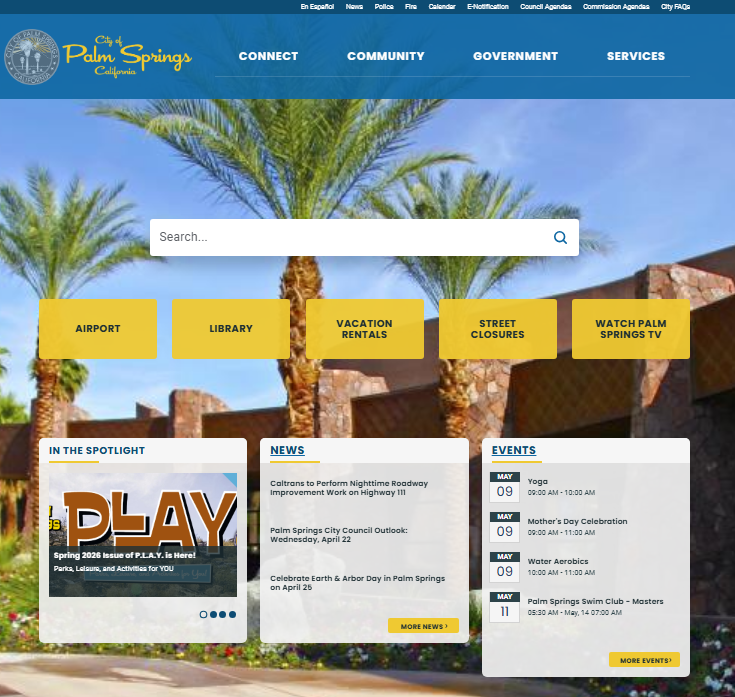
- Navigate to:
Police Department → File a Report / Public Safety Services
Information Typically Requested
- Date and time of incident
- Location of event
- Description of conduct or threats
- Witness information
- Photos, videos, or supporting evidence
After submission, the department may assign a case number and contact the reporting party for additional information.
Investigation and Review Process
Reported incidents are reviewed to determine whether they qualify as hate crimes or bias-related incidents under California law. Investigators may evaluate whether the conduct was motivated by factors such as:
- Race or ethnicity
- Religion
- Sexual orientation
- Gender identity
- Disability status
- National origin
Cases meeting statutory requirements may be referred for prosecution or further investigation.
Confidential and State-Level Reporting Options
California also provides statewide hate crime reporting resources through official agencies.
- https://oag.ca.gov/

- Navigate to:
Hate Crimes / Civil Rights Enforcement
Additional Support May Include
- Anonymous or confidential reporting
- Victim assistance resources
- Crisis support services
- State civil rights information
Hate Crime Laws and Legal Consequences in California
California has some of the strongest hate crime laws in the United States, designed to punish bias-motivated offenses more severely than standard crimes. These laws apply to both violent and non-violent acts, including threats, vandalism, and harassment. Penalties vary based on the nature of the offense and prior convictions.
California Penal Code § 422.55 – Definition of Hate Crime
Under California law, a hate crime is defined as a criminal act committed in whole or in part because of the victim’s actual or perceived race, color, religion, national origin, sexual orientation, gender, gender identity, or disability. The law requires proof that bias was a substantial motivating factor, not merely incidental. This distinction is crucial for prosecution and ensures that only genuine hate crimes are charged under the statute.
Enhanced Penalties for Hate Crimes
Hate crime convictions carry enhanced penalties. For example:
- Assault with bias motivation: Up to 4 years in prison (vs. 2 years for standard assault).
- Vandalism with hate symbols: Up to 3 years in prison and a $10,000 fine.
- Threats causing fear of death or injury: Up to 1 year in jail and a $5,000 fine.
Repeat offenders face doubled sentences. Judges may also order community service, bias education programs, or restitution to victims.
Federal Hate Crime Laws
The Matthew Shepard and James Byrd Jr. Hate Crimes Prevention Act (2009) allows federal prosecution of hate crimes when state authorities are unwilling or unable to act. The FBI investigates cases involving interstate commerce, federal property, or civil rights violations. In 2023, the U.S. Department of Justice opened an investigation in Palm Springs related to a cross-burning incident on federal land near the San Jacinto Mountains. Federal charges can result in life imprisonment for fatal attacks.
Community Response and Support Services
Local organizations and government agencies have mobilized to address the rise in hate crimes through education, advocacy, and direct support. These efforts aim to empower victims, prevent future incidents, and foster a culture of inclusion.
Palm Springs Hate Crime Task Force
Established in 2022, the task force includes representatives from PSPD, the Human Relations Commission, LGBTQ+ centers, and faith-based groups. It meets monthly to review cases, assess trends, and recommend policy changes. Recent initiatives include:
- Training officers in bias recognition and de-escalation.
- Launching a public awareness campaign with multilingual materials.
- Installing emergency call boxes in high-risk areas.
Victim Support Programs
The Palm Springs Victim Assistance Program offers free services, including:
- Crisis counseling and trauma therapy.
- Legal advocacy during court proceedings.
- Emergency shelter and relocation assistance.
- Financial aid for medical bills and property damage.
Contact the program at (760) 323-8111, ext. 450, or visit the PSPD lobby Monday–Friday, 8 a.m. to 5 p.m.
Community Education and Awareness
Local schools and nonprofits host annual events such as the “Unity in Diversity” forum and “Safe Spaces” workshops. These programs teach bystander intervention, cultural competency, and reporting procedures. In 2023, over 1,200 residents participated in training sessions.
Impact on Tourism and Local Businesses
The increase in hate crimes has raised concerns about Palm Springs’ reputation as a welcoming destination. Tourism accounts for 30% of the local economy, and negative publicity could deter visitors. Business owners report mixed effects, with some experiencing backlash and others seeing increased support from allies.
Tourism Trends and Visitor Feedback
According to the Palm Springs Bureau of Tourism, hotel bookings dropped 8% in Q2 2024 compared to 2023. Online reviews on platforms like TripAdvisor and Yelp show a rise in comments about safety concerns, particularly from LGBTQ+ travelers. However, many visitors also express solidarity, with phrases like “We stand with Palm Springs” appearing frequently.
Business Responses
Several businesses have taken proactive steps:
- The Ace Hotel installed security cameras and hired off-duty officers for weekend patrols.
- Cheeky’s Breakfast Burritos launched a “Safe Space” certification for staff trained in bias response.
- The Palm Springs International Film Festival added a “Community Safety” segment to its programming.
Economic Support Initiatives
The city council approved a $250,000 fund in 2024 to help businesses affected by hate crime-related disruptions. Grants cover security upgrades, marketing campaigns, and employee training.
Search Tool: Access Palm Springs Hate Crime Data
The California Department of Justice provides a public database for hate crime statistics. This tool allows users to search by city, year, and bias type. Follow these steps to retrieve data for Palm Springs:
Steps Search Instructions
- The California DOJ Hate Crime Dashboard.
- In the “City” field, type “Palm Springs” and select it from the dropdown.
- In the “Year” field, choose the desired year (e.g., 2023).
- In the “Bias Type” field, select “All” or specify a category (e.g., “Sexual Orientation”).
- Click the “Search” button located below the filters.
The system will return a table with the following data points:
- Total number of hate crimes
- Breakdown by biased motivation
- Type of offense (e.g., assault, vandalism)
- Arrest status
- Case resolution (e.g., charged, dismissed)
Results can be downloaded as a CSV file for further analysis.
| Organization | Address | Phone | Hours |
| Palm Springs Police Department | 200 S Civic Dr, Palm Springs, CA 92262 | (760) 323-8111 | Mon–Fri: 8 a.m.–5 p.m. |
| Victim Assistance Program | 200 S Civic Dr, Palm Springs, CA 92262 | (760) 323-8111 ext. 450 | Mon–Fri: 8 a.m.–5 p.m. |
| California Hate Crime Hotline | Statewide Service | 1-844-924-7332 | 24/7 |
FAQs About Hate Crimes Increase in Palm Springs, CA
Hate crimes in Palm Springs have become an important public safety and community concern, drawing attention from law enforcement, local organizations, and residents. These incidents are treated as serious offenses when motivated by bias based on a person’s identity, and they carry enhanced penalties under California law. The following FAQs explain how hate crimes are defined, reported, prosecuted, and addressed, as well as the support systems available to victims in the Palm Springs area.
What is the legal definition of a hate crime in California?
In California, a hate crime is defined under Penal Code § 422.55 as a criminal act committed in whole or in part because of the victim’s actual or perceived race, color, religion, national origin, sexual orientation, gender, gender identity, or disability. The law requires that bias be a substantial motivating factor, not just a minor influence. This means prosecutors must prove that the perpetrator’s actions were driven by prejudice against the victim’s identity. Examples include assaulting someone while shouting racial slurs or vandalizing a synagogue with anti-Semitic symbols. The definition excludes mere offensive speech unless it includes a credible threat of violence. This legal standard ensures that only genuinely bias-motivated crimes are prosecuted, protecting free speech while punishing harmful conduct.
How can I report a hate crime anonymously in Palm Springs?
You can report a hate crime anonymously through the California Hate Crime Hotline by calling 1-844-924-7332 or texting “CAHATE” to 741741. These services are operated by trained counselors and do not require your name or contact information. Reports are forwarded to the appropriate law enforcement agency, but your identity remains confidential unless you choose to disclose it. You can also use the California Department of Justice’s online reporting portal at oag.ca.gov/hatecrimes/report, which allows anonymous submissions. When filing, provide as much detail as possible, including the date, location, description of the incident, and any evidence like photos or videos. Anonymous reports are taken seriously and investigated, though they may limit follow-up communication. This option is ideal for victims who fear retaliation or distrust police.
What penalties do hate crime offenders face in California?
Hate crime offenders in California face enhanced penalties under state law. For example, assault motivated by bias can result in up to 4 years in prison, compared to 2 years for standard assault. Vandalism involving hate symbols carries a maximum sentence of 3 years and a $10,000 fine. Threats that cause fear of death or injury can lead to 1 year in jail and a $5,000 fine. Repeat offenders receive doubled sentences. Judges may also order community service, mandatory bias education programs, or restitution to victims. In severe cases, such as fatal attacks, federal charges under the Matthew Shepard Act can result in life imprisonment. These penalties reflect California’s commitment to deterring bias-motivated violence and holding offenders accountable.
How does Palm Springs compare to other cities in hate crime rates?
Palm Springs has one of the highest per capita hate crime rates in California. In 2023, the city reported 40 hate crimes per 100,000 residents, significantly higher than Los Angeles (12 per 100,000) and San Diego (9 per 100,000). Even progressive cities like Berkeley (28 per 100,000) and Davis (22 per 100,000) reported lower rates. This disparity is notable given Palm Springs’ small population of about 45,000. The concentration of incidents in tourist areas and the high percentage of anti-LGBTQ+ crimes contribute to this ranking. While raw numbers in larger cities are higher, the impact on a smaller community is more pronounced, affecting social cohesion and public perception. These statistics highlight the need for targeted interventions in Palm Springs.
What support is available for hate crime victims in Palm Springs?
Hate crime victims in Palm Springs can access free support through the Palm Springs Victim Assistance Program, located at the police department. Services include crisis counseling, trauma therapy, legal advocacy, emergency shelter, and financial aid for medical bills or property damage. The program also helps victims navigate the criminal justice system and apply for state compensation. Additionally, local nonprofits like the LGBT Community Center of the Desert offer peer support groups and safety planning. For immediate help, call (760) 323-8111, ext. 450, or visit the PSPD lobby Monday–Friday, 8 a.m. to 5 p.m. Confidential support is also available through the California Hate Crime Hotline at 1-844-924-7332. These resources ensure victims receive comprehensive care and protection.